 MyHomeDoc
Naltrexone FDA Approved Indications
Learn what naltrexone is FDA approved to treat, how it works for alcohol and opioid dependence, key safety facts, side effects, and important precautions.
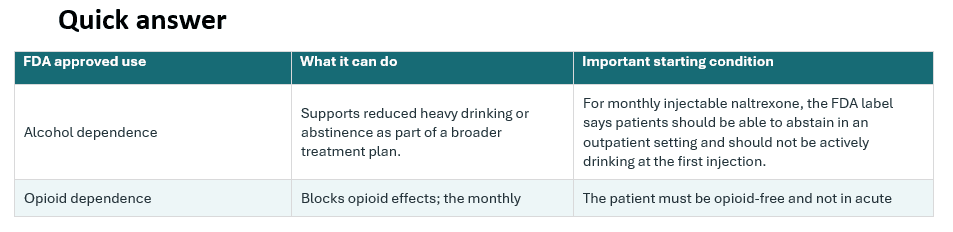
Naltrexone is an opioid-blocking prescription medication with two main FDA-approved uses: treating alcohol dependence and helping prevent relapse to opioid dependence after detoxification. Today, clinicians commonly discuss these conditions as alcohol use disorder and opioid use disorder. Naltrexone is not an opioid, is not a controlled substance, and does not cause a “high.” It works best as one part of a treatment plan that also includes medical follow-up and psychosocial support.
The most important safety point is simple: a person must not be physically dependent on opioids when naltrexone is started. Taking it too soon after opioids can trigger sudden, severe withdrawal.

How naltrexone works
Naltrexone attaches to opioid receptors in the brain and blocks them. Those receptors are involved not only in opioid effects but also in parts of the brain’s reward response to alcohol. For alcohol use disorder, naltrexone may reduce rewarding effects, cravings, and the likelihood of heavy drinking. For opioid use disorder, it blocks the euphoric and sedating effects of opioids while the medication is active.
Naltrexone does not treat opioid withdrawal. A person must complete withdrawal and be medically stable before treatment begins. It also does not replace counseling, recovery support, or treatment of coexisting medical and mental health conditions.
FDA approved indication 1Alcohol dependence
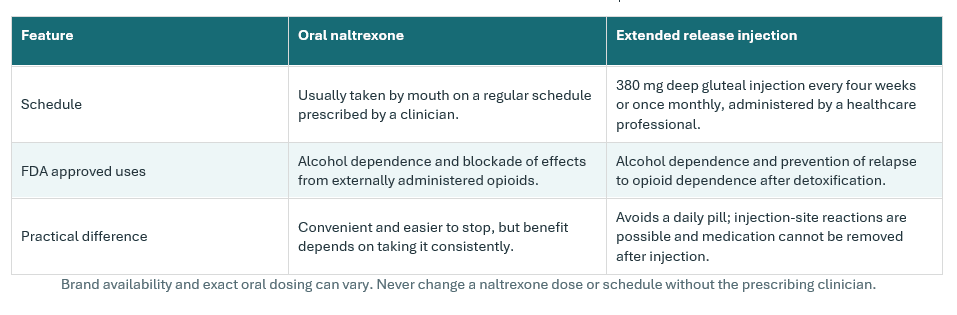
Oral naltrexone tablets are FDA approved for the treatment of alcohol dependence as part of an appropriate addiction-management plan. Extended-release injectable naltrexone, sold under the brand name Vivitrol, is also FDA approved for alcohol dependence in patients who can abstain in an outpatient setting before treatment. Patients should not be actively drinking when the first injection is given.
Naltrexone may be considered when a patient wants to stop drinking or reduce heavy drinking. It does not make a person sick if alcohol is consumed in the way disulfiram can, but drinking while taking naltrexone is not risk-free. Alcohol can still impair judgment, injure the liver, and cause accidents or alcohol poisoning. Treatment goals and the best medication option should be individualized with a clinician.
FDA approved indication 2Opioid dependence
Oral naltrexone is FDA approved to block the effects of externally administered opioids and is used within a treatment plan for opioid dependence. Extended-release injectable naltrexone is FDA approved to prevent relapse to opioid dependence after opioid detoxification. Current clinical language generally calls this opioid use disorder.
Before starting, patients must stop opioid use long enough to avoid precipitated withdrawal. The Vivitrol label recommends at least 7 to 10 opioid-free days for patients previously dependent on short-acting opioids. People transitioning from buprenorphine or methadone may remain vulnerable to precipitated withdrawal for as long as two weeks. A clinician may use history, examination, urine testing, or a naloxone challenge, but no method eliminates all risk.
Trying to overcome naltrexone’s blockade with large amounts of opioids is dangerous and can be fatal. Opioid tolerance also falls during treatment. Overdose risk can be higher when a dose is missed, near the end of an injection interval, after treatment is stopped, or if opioids are resumed. Patients should discuss naloxone access with their clinician and tell every healthcare professional that they take naltrexone.
Oral naltrexone versus the monthly injection
Who should not start naltrexone
A clinician should review all medications, recent substance use, medical history, pregnancy or breastfeeding status, and liver health. Naltrexone generally should not be started in someone who:
- is currently taking opioid pain medicine, cough medicine containing an opioid, illicit opioids, methadone, or buprenorphine;
- is physically dependent on opioids or is in acute opioid withdrawal;
- has a positive opioid screen or has not passed a clinician-directed naloxone challenge when one is needed;
- has had a serious allergic reaction to naltrexone or ingredients in the selected product; or
- has a medical issue that makes the formulation inappropriate, including certain injection-related concerns for the extended-release product.
Opioids can appear in unexpected places, including some prescription cough or diarrhea medicines. Patients should give the clinician a complete list of prescriptions, over-the-counter products, and supplements. Planned surgery, dental work, or acute pain care may require special coordination because routine opioid pain medicines may not work as expected.
Side effects and warning signs
Common effects can include nausea, headache, dizziness, tiredness, sleep changes, anxiety, reduced appetite, abdominal discomfort, or muscle and joint symptoms. The injection can cause pain, tenderness, swelling, itching, bruising, or a lump at the injection site.
Seek urgent medical care for trouble breathing, swelling of the face or mouth, severe rash, symptoms of severe opioid withdrawal, or a severe injection-site reaction. Contact a clinician promptly for possible liver injury symptoms such as persistent upper-right abdominal pain, dark urine, pale stools, yellow skin or eyes, or unusual fatigue. New or worsening depression, hopelessness, or suicidal thoughts also require prompt help. In the United States, call or text 988 for a mental health crisis, and call 911 for an immediate emergency.
What is not FDA approved for naltrexone alone
Naltrexone is sometimes discussed online for weight loss, chronic pain, fibromyalgia, autoimmune conditions, itching, smoking cessation, gambling, binge eating, or other compulsive behaviors. These are not FDA-approved indications for naltrexone by itself. “Low-dose naltrexone” is also an off-label approach and is not an FDA-approved indication or standardized FDA-approved formulation.
A separate prescription product that combines naltrexone with bupropion is FDA approved for chronic weight management in certain adults. That approval applies to the specific combination product, not to naltrexone alone. Off-label prescribing can be medically appropriate in selected cases, but it should follow an individualized discussion of evidence, alternatives, benefits, and risks.
Frequently asked questions
Is naltrexone addictive?
No. Naltrexone does not produce euphoria, is not an opioid, and is not a controlled substance. Stopping it does not cause opioid-type withdrawal, although stopping can remove its protective opioid blockade.
Can naltrexone be started while a person is still using opioids?
No. Starting naltrexone while opioids are still in the body or while physical dependence is present can cause abrupt, severe withdrawal. The safe waiting period depends on the opioid, last use, dose, duration of use, and individual health factors.
Can someone drink alcohol while taking naltrexone?
Naltrexone does not create an automatic alcohol-aversive reaction, but it does not make drinking safe. The first Vivitrol injection should not be given while a patient is actively drinking. Patients should follow the treatment goal and safety plan agreed on with their clinician.
Can naltrexone be prescribed through telehealth?
A clinician may be able to evaluate and prescribe oral naltrexone through telehealth when clinically appropriate and permitted by applicable rules. Lab testing or in-person services may still be needed. Extended-release naltrexone must be administered by a healthcare professional.
The bottom line
Naltrexone has two core FDA-approved treatment roles: alcohol dependence and opioid dependence. The right formulation depends on the patient’s goals, recent opioid exposure, health history, ability to take a daily medication, and access to follow-up care. Because starting naltrexone at the wrong time can cause severe opioid withdrawal—and because overdose risk changes during and after treatment—a medical evaluation is essential.
Book an affordable telehealth appointment
To book an affordable telehealth appointment online—even if you are uninsured—with visits starting at $39, visit MyHomeDoc Telehealth at www.myhomedoc.care. A licensed clinician can review your symptoms, medical history, medications, and treatment options and determine whether telehealth care is appropriate.
If you may be experiencing severe withdrawal, an overdose, suicidal thoughts, trouble breathing, or another emergency, call 911 or go to the nearest emergency department. This article is general education and is not a diagnosis or a substitute for individualized medical care.
Sources
- U.S. Food and Drug Administration. Revia naltrexone hydrochloride tablets prescribing information. https://www.accessdata.fda.gov/drugsatfda_docs/label/2013/018932s017lbl.pdf
- U.S. Food and Drug Administration. Vivitrol naltrexone extended-release injectable suspension prescribing information. https://www.accessdata.fda.gov/drugsatfda_docs/label/2022/021897s057lbl.pdf
- Substance Abuse and Mental Health Services Administration. What is Naltrexone? https://www.samhsa.gov/substance-use/treatment/options/naltrexone
- Substance Abuse and Mental Health Services Administration. TIP 63 Medications for Opioid Use Disorder. https://library.samhsa.gov/product/tip-63-medications-opioid-use-disorder/pep21-02-01-002
Have questions? Talk to a doctor today.
MyHomeDoc physicians are available 7 days a week across Texas.
Book an Appointment