 MyHomeDoc
GHK Cu Copper Peptide Therapy: Skin Rejuvenation and Hair Growth Research
GHK Cu is a copper peptide studied for skin, hair, and wound healing. What the research shows, how it is used, and what it costs.

GHK Cu is a small copper peptide that has become one of the most talked about ingredients in skin care and hair loss research. It is sold in serums, creams, and injections, and it is praised online for skin rejuvenation, hair growth, and wound healing. The GHK Cu peptide was first found in human blood plasma, and it has been studied for decades. GHK Cu is not a drug and not FDA approved for skin or hair uses, but the research behind it is real and growing. The GHK Cu benefits people ask about most are firmer skin, faster healing, and thicker looking hair, though the research behind each one is at a different stage.
This article explains what the peptide is, how it is thought to work, what the research actually shows for skin and hair, the forms it comes in, and what it costs. It is a research compound, not a proven treatment, and the honest picture matters more than the hype.
What Is GHK Cu?
GHK Cu is a peptide made of three amino acids, glycine, histidine, and lysine, bound to a copper ion. The body makes it naturally, and levels fall with age. It is found in blood plasma, saliva, and urine, and it is released when tissue is injured, which is why researchers think it plays a role in repair.
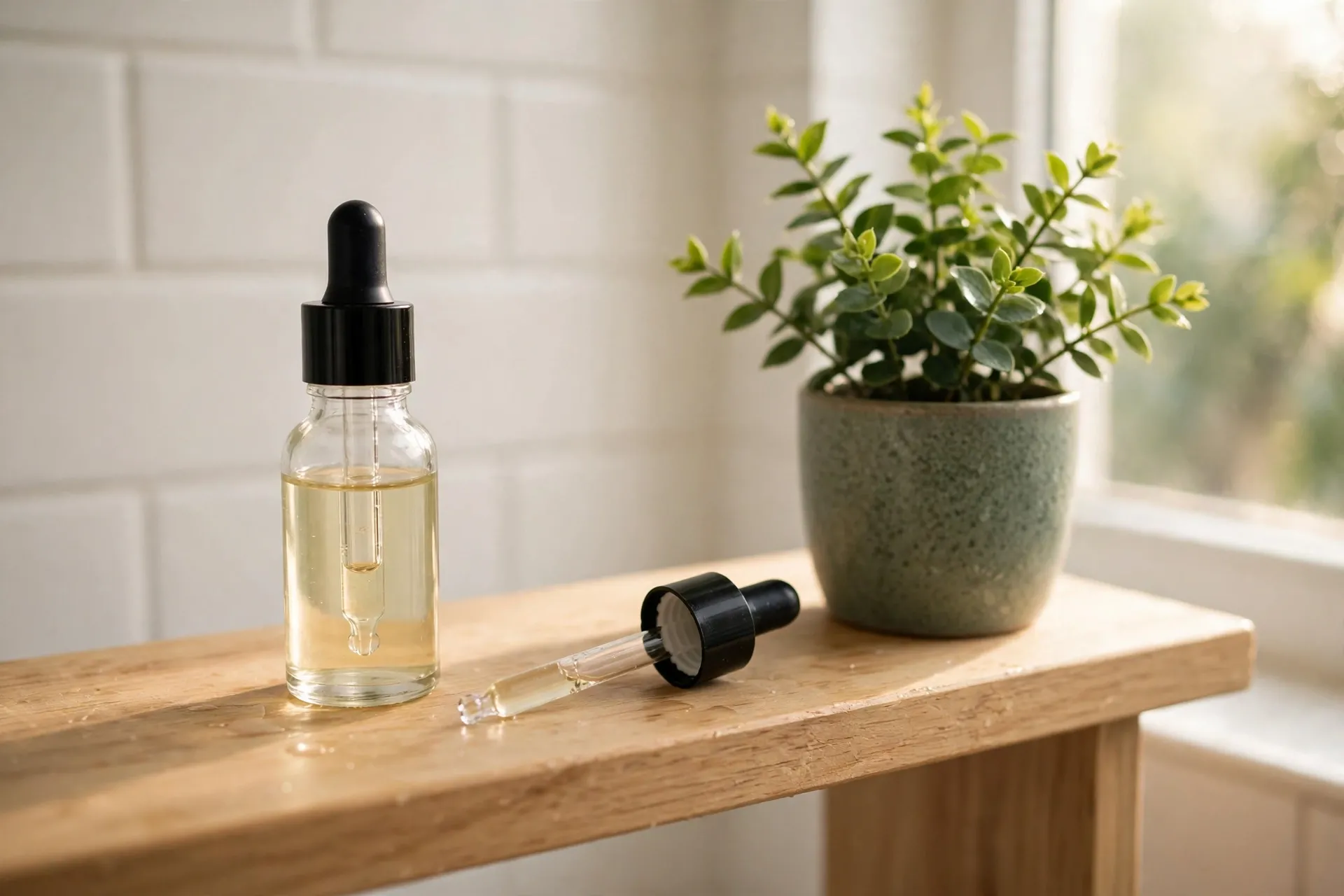
The GHK Cu peptide is sold as a cosmetic ingredient and as a research compound. In skin care, a GHK Cu serum is the usual form, and a cream is the other common option. In research settings, it is also given as an injection under the skin. It is not FDA approved for any medical use, and it is not a medicine. The forms sold online are not regulated the same way drugs are, so the quality varies.
Copper peptides are a wider group, and this one is the best studied of them. It is also called copper tripeptide 1 on some product labels. Do not confuse it with copper supplements, which are different and are taken by mouth for a copper deficiency.
How It Works
GHK Cu carries copper to the skin, and copper is needed to make collagen, the protein that keeps skin firm. It is thought to switch on genes involved in repair, and to calm inflammation in the skin. GHK Cu also affects genes involved in repair and renewal, which is why researchers study it for wound healing and for aging skin.
In laboratory studies, the peptide increased collagen production and helped skin cells grow and repair. In animal studies, it sped up wound healing. In human studies, the evidence is smaller: a few small trials found better skin firmness, fewer fine lines, and faster healing after cosmetic procedures. The evidence is promising but not strong, and the studies are small and short.
For hair, the idea is similar: the peptide may improve blood flow to the scalp and support the hair follicles. The evidence is thinner here, and most of it comes from small studies and patient reports, not large trials. The GHK Cu benefits for hair would come from that better blood flow to the scalp, but the evidence is thinner here than for skin.
Skin Benefits
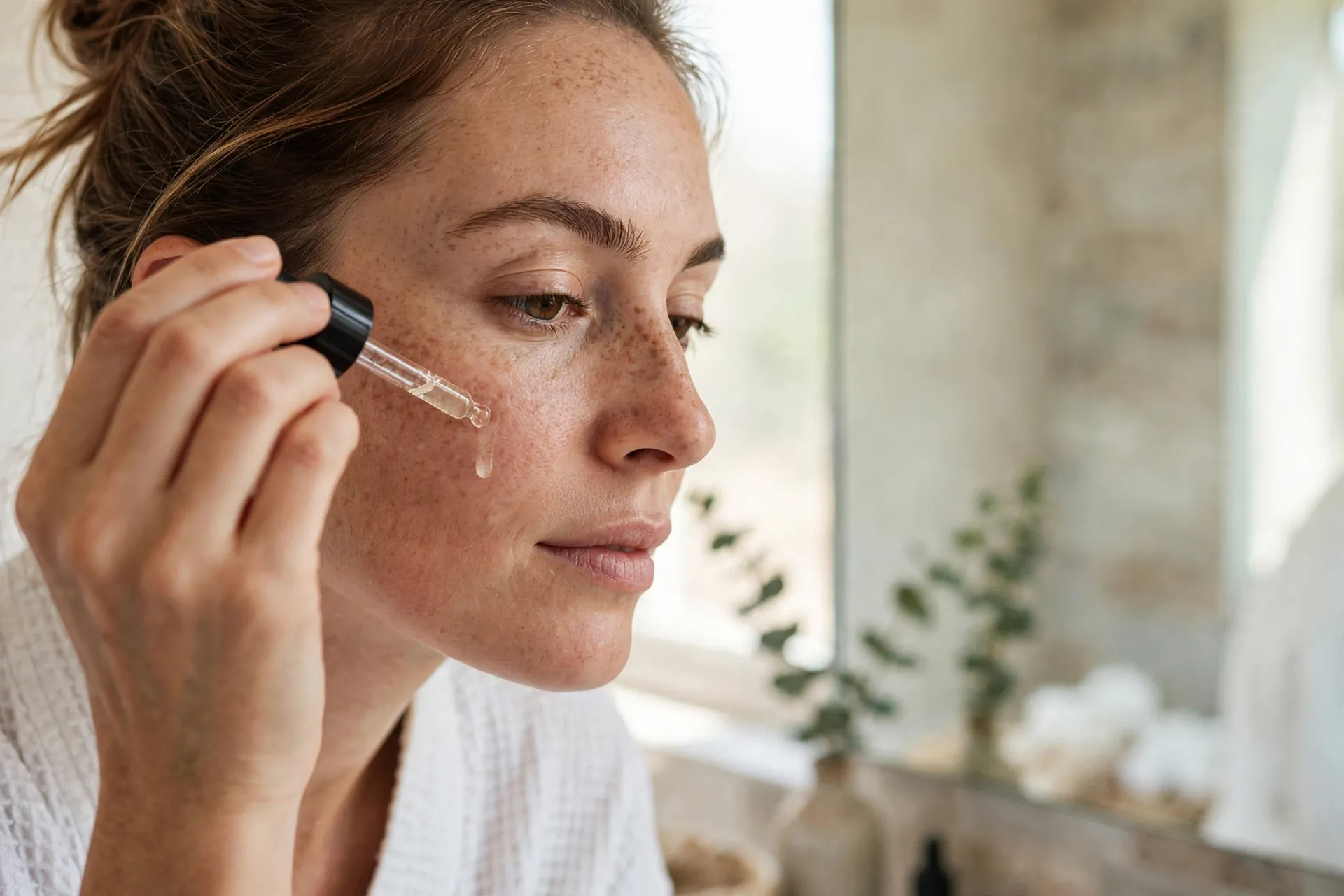
GHK Cu is best known for skin. It supports collagen, which is the protein that keeps skin firm and elastic. It may also help with fine lines, uneven tone, and skin that heals slowly. The GHK Cu peptide is often sold as a serum, and it is usually applied once or twice a day after cleansing. The GHK Cu benefits for skin come down to collagen support, and that is why firmer skin and fewer fine lines are the results people notice first. A GHK Cu serum is easy to fit into a routine, since it goes on clean skin and soaks in quickly.
Some people use it after cosmetic procedures such as microneedling or laser treatment, because it may speed healing and reduce redness. A few small studies support this, but the evidence is not strong enough to call it proven. It is also used for scars and stretch marks, though the evidence there is thinner still.
GHK Cu side effects on the skin are usually mild. It can cause redness or irritation in some people, especially when combined with strong acids or retinoids. Start slowly, and stop if the skin becomes red or sore.
Hair Growth
GHK Cu is also used for hair growth, usually as a serum applied to the scalp or as an injection. The idea is that it improves blood flow to the follicles and supports the growth phase of the hair cycle. GHK Cu before and after photos for hair are common online, and they often show thicker looking hair after a few months.
The evidence for hair growth is limited. A few small studies found modest improvements in hair thickness and density, but there are no large trials, and the results vary. It is not a treatment for advanced hair loss, and it will not regrow hair where the follicles are gone. For pattern hair loss, the proven treatments are still minoxidil and finasteride, and a doctor can help you compare them.
If you try it for hair, be patient. Hair grows slowly, and any change takes three to six months to judge fairly.

Before and After
GHK Cu before and after photos can be striking, but they are not proof. When you look at GHK Cu before and after photos, remember that lighting, angles, and camera settings change the result, and that sellers choose their best cases. GHK Cu is not a miracle, and the changes in photos are often subtle in real life.
For skin, the most realistic results are slightly firmer skin, a more even tone, and faster healing after procedures. For hair, the most realistic result is slightly thicker looking hair, not a full head of new hair. If a product promises dramatic regrowth in weeks, be skeptical.
Take your own photos in the same light, from the same angle, once a month, if you want to judge the result honestly. That is a better guide than any seller's gallery.
Dosage and Forms
GHK Cu is available as a serum, a cream, and an injection. The GHK Cu dosage depends on the form, and there is no standard dose, because it is not an approved drug. GHK Cu dosage for the injection form is set by the clinician who prescribes it, and it is usually given under the skin in a small amount.
A GHK Cu peptide injection is the form used in research settings, and it is the form most often discussed online for hair and skin. A GHK Cu serum and the cream form are both applied to the skin once or twice a day, and the amount is measured in drops or pumps, not in milligrams.
Because there is no standard dose, quality and strength vary between sellers. Only use products from a licensed pharmacy or a reputable seller, and only with a clinician's guidance. Do not inject anything you bought online without a prescription and a clinician's oversight.
- Serum: applied to the skin, once or twice a day, $30 to $80 a bottle
- Cream: applied to the skin, once or twice a day, $30 to $70 a jar
- Injection: under the skin, by a clinician, several times a week, $100 to $300 a month
Injections vs Topical
The injection form and the topical form work differently. A GHK Cu peptide injection is given under the skin, so it reaches the blood and the tissue directly. The topical form is applied to the skin, so it acts where it is applied. A GHK Cu peptide injection is the form used in most of the research on hair and wound healing, because the dose can be controlled.
The GHK Cu dosage for injections is set by the clinician, and it is usually higher than the amount in a serum. The GHK Cu peptide is also available as a serum, and the serum is the safer and simpler option for most people, because it does not involve needles or a prescription.
Injections carry more risk: infection, bruising, and pain at the injection site. They should only be given by a clinician, with sterile equipment. The GHK Cu side effects from injections are usually soreness, bruising, or pain where the needle went in, which is why sterile equipment and a clinician matter. Topical forms carry less risk, but they may also do less, because only a small amount reaches the deeper skin.
Is It Safe?
GHK Cu is generally considered low risk in the small studies so far, and serious side effects are rare. The most common GHK Cu side effects are mild skin redness or irritation from the serum, and soreness or bruising from injections. Some people report a metallic taste or mild nausea after an injection.
The GHK Cu dosage should always be set by a clinician, and the product should come from a licensed source. Because the compound is not FDA approved, the quality varies, and some products contain less than the label claims. There is also little long term safety data, so it should not be used during pregnancy or breastfeeding, and it should not be used by children.
Tell your doctor about every medicine and supplement you take, and about any allergies, before you start. If you notice a rash, swelling, or trouble breathing, stop and get medical care right away.
What the Research Says
The research on copper peptides goes back to the 1970s, when the peptide was first found in blood plasma. Since then, laboratory studies have shown that it can increase collagen, calm inflammation, and help wounds heal in animals. Human studies are fewer and smaller, and most of them look at skin firmness, fine lines, and healing after cosmetic procedures.
For hair, the evidence is thinner. A few small studies found modest improvements in thickness, but there are no large trials, and the results are mixed. For wound healing, the evidence is more encouraging, but the studies are small and mostly in animals or in people recovering from procedures.
The honest summary is that the peptide is promising but not proven. It is a research compound, and the claims online often go further than the evidence. If you try it, do so with a clear plan, a licensed source, and realistic hopes. The GHK Cu benefits the research supports best are firmer skin and faster healing after procedures, while the hair results are thinner and the wound healing evidence is mostly from animals.
Other peptides studied for similar goals are covered in our guide to tesamorelin therapy in Texas.
For tissue repair research, see also our guide to BPC 157 and TB 500 therapy in Texas.
Frequently Asked Questions
what does ghk cu do
It is a copper peptide that carries copper to the skin and is thought to support collagen, calm inflammation, and help tissue repair. People use it for skin firmness, fine lines, hair growth, and wound healing. GHK Cu before and after photos are the main evidence most people see, but the research is still small.
what is ghk cu
GHK Cu is a peptide made of three amino acids bound to a copper ion. It is found naturally in the body, and levels fall with age. A GHK Cu serum is the form most people buy first. It is also sold as a cream and an injection, and it is used for skin and hair, though it is not FDA approved for any medical use.
is ghk cu fda approved
No. It is not FDA approved for skin, hair, or any medical use. It is sold as a cosmetic ingredient and as a research compound, which means the quality is not regulated the same way drugs are. Only use products from a licensed source.
is ghk cu safe
It is generally considered low risk in the small studies so far, and serious side effects are rare. The most common GHK Cu side effects are mild skin irritation from the serum and soreness from injections. There is little long term safety data, so it should not be used during pregnancy or breastfeeding.
where to inject ghk cu
A GHK Cu peptide injection is not an approved medicine, and any question about how it is given must be discussed with a clinician. Do not inject anything you bought online without a prescription and a clinician’s oversight.
Talk to a Doctor Today
If you are thinking about copper peptides for skin or hair, start with a conversation, not a purchase. A MyHomeDoc doctor can review your history and medicines and talk with you about whether it is right for you and what the next steps would look like. Same day phone and video visits are available seven days a week from $39, with no insurance needed, anywhere in Texas. Call +1 346 831 4832 or book at myhomedoc.care.
This article is for education only and is not medical advice. Talk to a doctor about your own situation before making any treatment decision.
Have questions? Talk to a doctor today.
MyHomeDoc physicians are available 7 days a week across Texas.
Book an Appointment