 MyHomeDoc
Migraine Back of Head: Causes, Symptoms, Relief and Treatment
Pain in the back of your head? Learn about migraine back of head causes, symptoms, triggers, how long migraines last, relief options, and when to seek medical care.
Migraine Back of Head: Causes, Symptoms, Relief and Treatment
A headache that starts or becomes noticeable at the back of your head can be painful, confusing, and difficult to ignore. You may wonder if it is a migraine, a neck problem, or another type of headache.
A migraine does not always follow the same pattern. Although many people associate migraine with pain on one side of the forehead or temple, the pain can occur in different parts of the head. A migraine back of head may cause throbbing pain, pressure, nausea, sensitivity to light, sensitivity to sound, dizziness, or visual changes.
Understanding your symptoms can help you recognize your headache pattern and know when it is time to talk with a healthcare professional.
What Is a Migraine Back of Head?
A migraine back of head refers to migraine pain that is felt toward the back of the skull, upper neck, or nearby areas. Migraine pain can occur on one or both sides of the head and may move during an attack. It is often described as throbbing or pulsing and can become worse with normal physical activity.
A migraine back of head can happen with other common migraine symptoms, including nausea, vomiting, sensitivity to light, sensitivity to sound, sensitivity to smell, and fatigue.
Some people also experience neck pain or neck stiffness during an attack. This can make a migraine back of head feel similar to a tension headache or cervicogenic headache.
If you regularly experience a migraine back of head, keeping a headache diary can help you record the location, intensity, duration, possible triggers, and other symptoms. This information can be useful when discussing your headaches with a healthcare professional.
What Does a Migraine Back of Head Feel Like?
A migraine back of head can feel different from one person to another. Some people describe a strong throbbing sensation, while others notice pressure, aching, or pain that spreads toward the neck.
Common symptoms can include:
- Throbbing or pulsating pain
- Moderate to severe headache pain
- Pain on one or both sides
- Nausea or vomiting
- Sensitivity to light
- Sensitivity to sound
- Sensitivity to smell
- Dizziness
- Blurred vision
- Visual disturbances
- Numbness or tingling
- Difficulty concentrating
- Neck stiffness
- Fatigue
A migraine back of head may become worse when you walk, climb stairs, bend over, or perform other physical activities.
Some people experience aura before or during a migraine. Aura may involve temporary vision changes, tingling, numbness, or speech difficulties. These symptoms usually develop gradually and commonly last less than an hour.
What Causes Migraine Pain in the Back of the Head?
There is no single reason why migraine pain is felt in a particular location. Migraine is a neurological disease involving changes in pain-processing pathways. Different people can have different symptoms and triggers.
Common migraine triggers include:
- Stress
- Changes in sleep
- Skipping meals
- Dehydration
- Hormonal fluctuations
- Bright lights
- Strong odors
- Certain foods
- Caffeine changes
- Weather changes
- Physical exertion
These factors can trigger attacks in some people, but they are not necessarily the underlying cause of migraine. Keeping regular sleep, meals, hydration, exercise, and stress-management habits may help reduce attacks for some people.
A migraine back of head can also occur with neck discomfort. However, pain in this location does not automatically mean the neck is causing the migraine.
Other conditions can cause pain in the back of the head, including tension-type headache, occipital neuralgia, cervicogenic headache, exertional headache, and post-traumatic headache. This is why repeated or unusual headaches deserve proper evaluation.
Types of Migraines That Can Cause Head Pain
There are several types of migraines, and symptoms are not identical for everyone. Understanding the types of migraines can make it easier to recognize changes in your own headache pattern.
Migraine Without Aura
Migraine without aura can cause moderate to severe throbbing pain, nausea, and sensitivity to light or sound. The pain may occur on one side or both sides of the head.
Migraine With Aura
Migraine with aura can cause temporary visual symptoms, tingling, numbness, or speech changes before or during the headache. Aura usually develops gradually and resolves within about an hour.
Hemiplegic Migraine
A hemiplegic migraine is a rare migraine type that can cause temporary weakness or paralysis on one side of the body along with other migraine symptoms.
Because weakness, numbness, speech problems, or vision changes can also occur with a stroke, sudden neurological symptoms require urgent medical evaluation. A hemiplegic migraine should only be diagnosed by an appropriate healthcare professional.
Chronic Migraine
Chronic migraine involves frequent headache days over time. People with frequent or disabling attacks may need both acute treatment and preventive treatment.
Learning about the types of migraines can help you understand why two people with migraine may have very different symptoms.
Can a Migraine Cause Pain Behind the Eye?
Yes, migraine pain can sometimes occur around or behind the eye. A migraine behind eye may happen along with throbbing head pain, nausea, light sensitivity, or visual symptoms.
A migraine behind eye can sometimes be confused with sinus pain, eye strain, or other headache disorders. Severe or unusual eye pain should not automatically be
assumed to be migraine.
An optic migraine is another phrase sometimes used when people are searching for migraine-related visual symptoms. However, sudden or persistent vision loss should receive prompt medical evaluation rather than being automatically attributed to migraine.
An optic migraine may involve temporary visual disturbances, such as flashing lights, blind spots, zigzag patterns, or shimmering areas. These symptoms can occur with migraine aura.
If you repeatedly experience a migraine behind eye, note whether the pain occurs before, during, or after visual symptoms.
How Long Do Migraines Last?
Many people ask, how long do migraines last? An untreated migraine attack commonly lasts between four and 72 hours. The exact experience varies from person to person.
So, how long do migraines last in someone who has frequent attacks? The answer can depend on the type of migraine, the person's symptoms, triggers, and whether treatment is used early.
After the main headache improves, some people experience a postdrome period. They may feel tired, mentally foggy, drained, or sensitive for some time after the pain ends.
Understanding how long do migraines last can help you notice when your usual pattern changes.
If you are repeatedly wondering how long do migraines last because your headaches are lasting longer than normal, discuss the change with a healthcare professional.
What Can Trigger a Migraine?
A migraine back of head may be associated with triggers that affect your nervous system. However, triggers are different for everyone.
Some common triggers include:
- Not getting enough sleep
- Sleeping at unusual times
- Missing meals
- Dehydration
- Stress
- Hormonal changes
- Bright or flashing lights
- Strong smells
- Alcohol
- Changes in caffeine intake
- Weather changes
- Certain foods
A headache diary can help you find patterns. Record when the headache begins, where you feel the pain, how severe it is, what you ate, how much you slept, your stress level, and any medication you took.
This can help a healthcare professional understand your migraine symptoms and determine whether additional testing or treatment is appropriate.
How to Relieve a Migraine Back of Head
When a migraine back of head begins, you may want immediate relief. Start with simple steps that are safe for you.
1. Rest in a quiet place
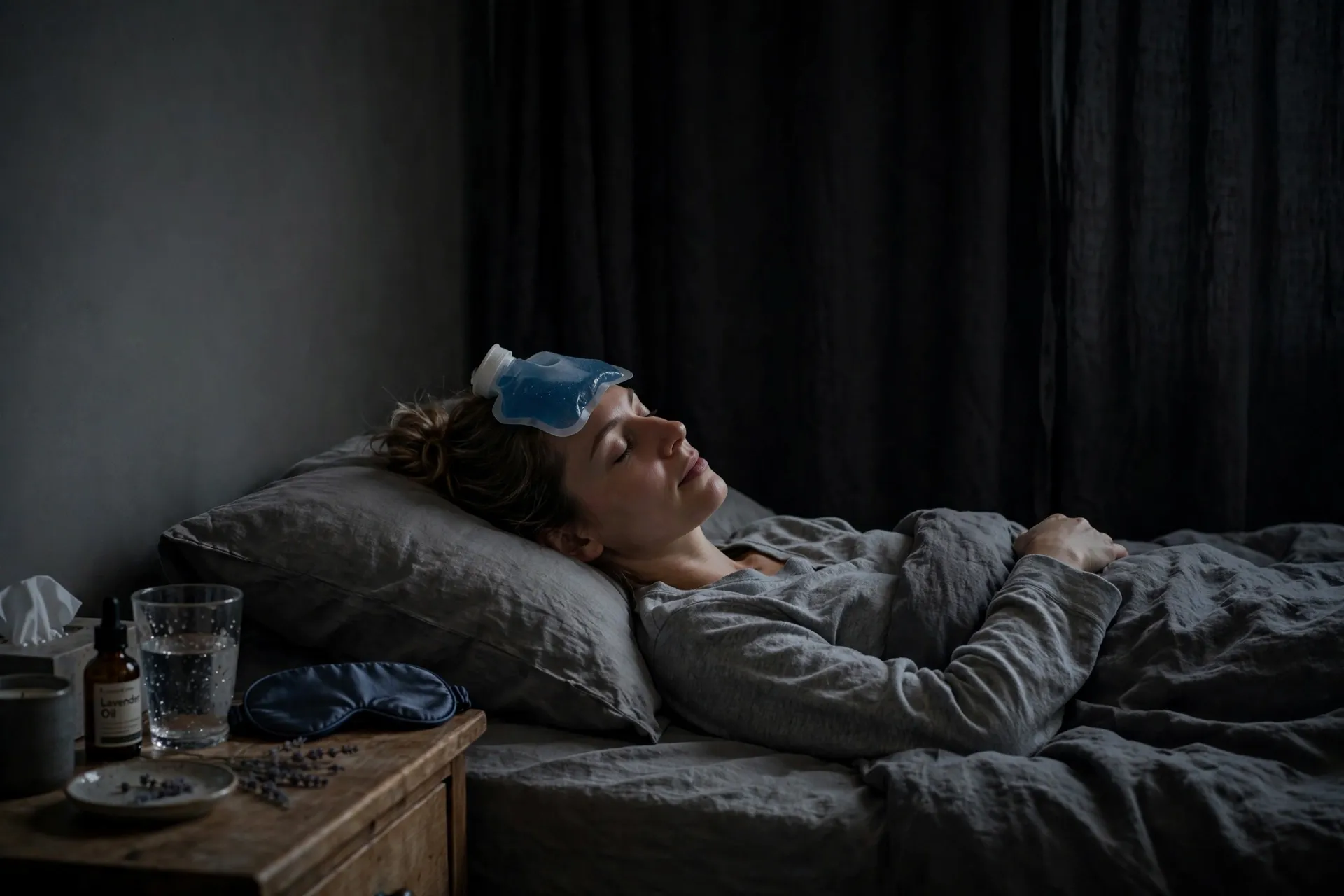
Bright lights and loud sounds can make migraine symptoms harder to tolerate. Resting in a quiet, dark room may make the attack easier to manage.
2. Drink fluids
Dehydration can be associated with headaches. Sip water regularly, particularly if you have not been drinking enough.
3. Try a cool compress

A cool cloth or wrapped ice pack placed on the head or neck may provide temporary comfort.
4. Eat if you skipped a meal
Going for long periods without food can be a trigger for some people. A regular meal pattern may help reduce avoidable triggers.
5. Follow your treatment plan
If a healthcare professional has recommended acute migraine medication, follow the instructions provided.
If you are searching for how to relieve migraines, remember that treatment should be based on your symptoms, medical history, other medications, and the frequency of your headaches.
Frequently using pain medicines can contribute to medication overuse headache in some people. If you regularly need acute medication, discuss your treatment plan with a healthcare professional.
When Should You See a Migraine Doctor?
A migraine doctor can help when headaches are frequent, severe, difficult to control, or interfering with your normal activities.
Consider medical advice if:
- Your headaches happen frequently.
- Your headaches are becoming more severe.
- Your usual headache pattern changes.
- You regularly miss work, school, or activities because of headaches.
- Your current treatment is not helping.
- You frequently use pain medication.
- You develop new neurological symptoms.
A migraine doctor can review your medical history, symptoms, headache frequency, possible triggers, and previous treatments.
Preventive treatment may be considered for people with frequent or disabling migraine attacks. Current guidance emphasizes choosing treatment based on headache frequency, severity, impact on daily activities, other health conditions, potential side effects, and individual preferences.
If you need a migraine doctor, starting with a primary care or telehealth consultation can be a convenient way to discuss your symptoms and determine what type of care may be appropriate.
Migraine Treatment and Prevention
Migraine treatment generally falls into two broad categories: treatment used during an attack and preventive treatment used to reduce future attacks.
Acute treatment is intended to help relieve symptoms when an attack begins. Depending on the individual situation, treatment may include certain pain medicines or migraine-specific medications.
Preventive treatment is taken regularly to reduce the frequency or severity of migraine attacks. Options can include certain blood pressure medicines, anticonvulsants, antidepressants, CGRP-targeted therapies, injections, supplements, or neuromodulation approaches. The appropriate option depends on the person.
Lifestyle changes can also support migraine prevention. Regular sleep, exercise, balanced meals, hydration, stress management, and a headache diary can help some people identify and reduce triggers.
If your migraine back of head occurs regularly, do not assume you simply have to live with it. A personalized treatment plan may help reduce the frequency, severity, or impact of attacks.
When Is a Back-of-Head Headache an Emergency?
Not every headache in the back of the head is a migraine.
Seek urgent medical care for a sudden, extremely severe headache, especially when it reaches maximum intensity quickly. You should also seek urgent evaluation if a headache occurs with fever, stiff neck, confusion, seizure, double vision, significant weakness, numbness, speech problems, or after a head injury.
These symptoms can have causes that require immediate evaluation.
Do not rely on the location of the pain alone to decide whether a headache is safe to manage at home.
Can Migraines Cause Fever?
People often ask, can migraines cause fever? Fever is not considered a typical migraine symptom.
If you have a headache with fever, stiff neck, confusion, rash, seizure, weakness, numbness, or other serious symptoms, seek urgent medical care rather than assuming the symptoms are caused by migraine.
How MyHomeDoc Can Help
Recurring headaches can make work, school, family responsibilities, and everyday activities harder. You should not have to guess whether your symptoms need medical attention.
MyHomeDoc provides convenient telehealth care so you can discuss your symptoms from home. During a visit, you can explain where the pain occurs, how often it happens, how long attacks last, what triggers you have noticed, and what treatments you have already tried.
If appropriate, our healthcare professionals can help you understand your next steps and whether additional evaluation or treatment may be needed.
If your migraine symptoms are interfering with your daily life, getting professional guidance can help you move from guessing about your headaches to having a clearer care plan.
Frequently Asked Questions
How to Relieve Migraines Quickly?
To help relieve migraines, rest in a quiet and dark room, drink water, use a cool compress, eat if you skipped a meal, and follow your recommended treatment plan. If attacks are frequent or severe, talk with a healthcare professional about acute and preventive treatment options.
How Long Does a Migraine Last?
How long does a migraine last? An untreated migraine attack commonly lasts four to 72 hours. The duration can vary between people and between individual attacks. If your headache lasts much longer than your usual pattern or becomes significantly different, seek medical advice.
How Long Can a Migraine Last?
If you are asking how long can a migraine last, an untreated attack may continue for up to 72 hours. Some people also experience symptoms before the headache and fatigue or mental fog afterward. A healthcare professional can help if attacks are unusually long, frequent, or difficult to control.
Can Migraines Cause Fever?
Can migraines cause fever? Fever is not a typical migraine symptom. A headache with fever, stiff neck, confusion, seizures, weakness, numbness, or other serious symptoms needs prompt medical evaluation because another medical condition may be responsible.
When Should I See a Migraine Doctor?
You should consider seeing a migraine doctor when headaches are frequent, severe, changing, or interfering with your normal activities. You should also seek urgent care for a sudden severe headache or a headache accompanied by serious neurological symptoms.
Final Thoughts
A migraine back of head can feel very different from the headache people commonly picture when they hear the word migraine. The pain may spread toward the neck, occur with nausea or light sensitivity, or appear alongside visual symptoms.
The location of your headache alone cannot determine the cause. Your symptoms, duration, triggers, medical history, and associated neurological symptoms all matter.
If you repeatedly experience a migraine back of head, keep a headache diary and discuss your symptoms with a healthcare professional. Treatment can include acute medicines, preventive options, lifestyle changes, and other approaches depending on your individual needs.
If you want convenient medical guidance without leaving home, MyHomeDoc can help you discuss your headache symptoms through telehealth. Schedule a visit and take the next step toward understanding and managing your recurring headaches.
Medical disclaimer: This article is for informational purposes only and is not medical advice. Always consult a qualified healthcare professional about symptoms that concern you.
If sinus pain is your main symptom, read whether a sinus infection can cause a fever.
Fever with body aches and congestion more often points to cold vs flu symptoms.
You can also discuss your symptoms through our telemedicine visits.
Have questions? Talk to a doctor today.
MyHomeDoc physicians are available 7 days a week across Texas.
Book an Appointment