 MyHomeDoc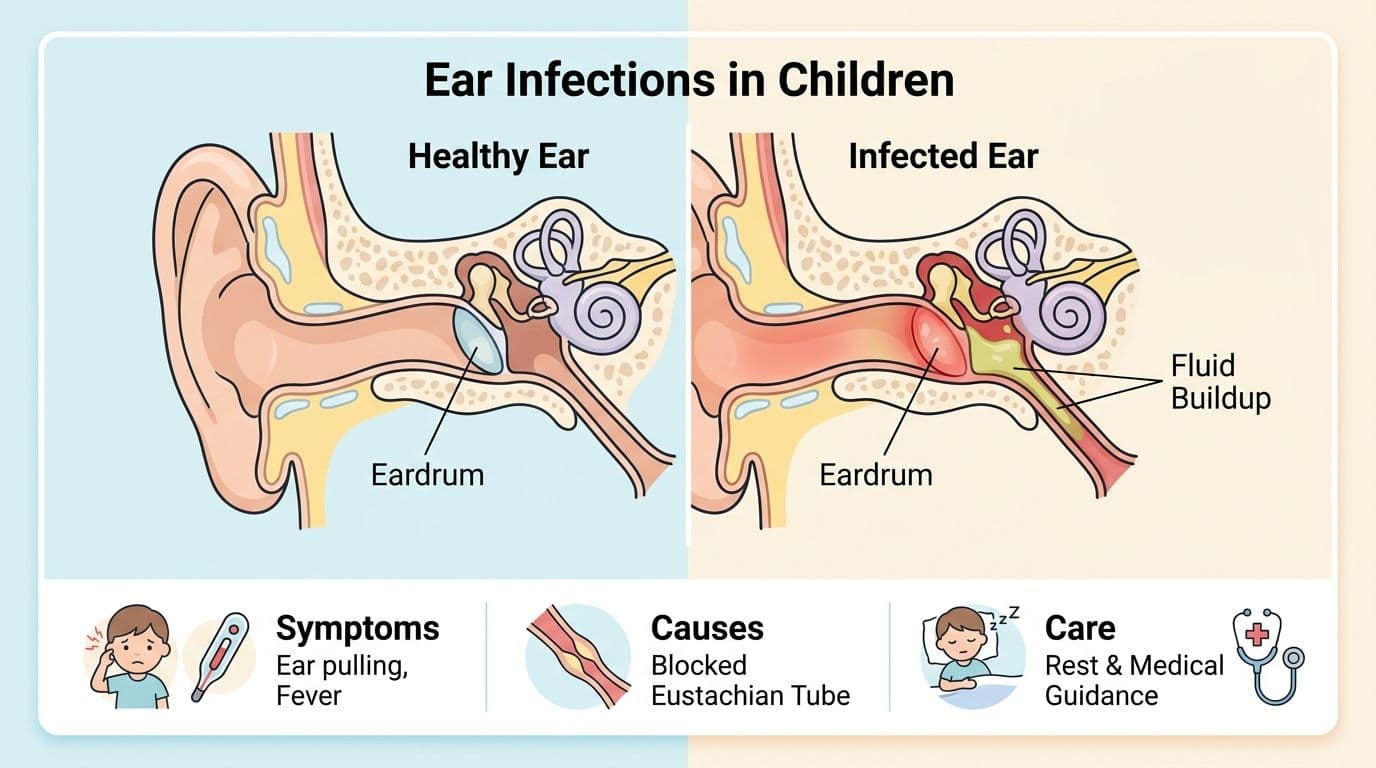
Preventing and Treating Ear Infections in Kids
Learn how to prevent and treat ear infections in kids, recognize warning signs, manage pain, and know when your child needs medical care.
Your child wakes up crying, keeps pulling at their ear, and struggles to sleep. You may wonder if it is just a cold or something that needs medical attention. Ear problems are common in young children, and knowing what to look for can help parents respond with confidence.
Ear infections can cause pain, fever, irritability, and difficulty hearing. Some improve on their own, while others need antibiotics or additional medical care. Understanding the symptoms, causes, and prevention steps can help you make informed decisions about your child's health.
In this guide, we will explain how ear infections develop, how to recognize the symptoms, what treatments may help, and when you should contact a healthcare professional.
What Are Ear Infections in Children?
Ear infections occur when inflammation and infection affect parts of the ear. The most common type in young children is a middle ear infection, also called acute otitis media.
The middle ear is the space behind the eardrum. It normally contains air, but fluid can build up when the eustachian tubes become blocked. Bacteria or viruses may then grow in that fluid and cause an infection.
Children are more likely to develop ear problems than adults because their eustachian tubes are smaller and positioned differently. This makes it harder for fluid to drain properly.
A viral ear infection may develop after a cold, flu, or another respiratory illness. Viruses can cause inflammation and fluid buildup, and bacteria may sometimes grow in the trapped fluid.
Not every earache means a child has an infection. A healthcare provider needs to examine the eardrum and consider the child's symptoms before confirming a diagnosis.
Symptoms of an Ear Infection in Kids
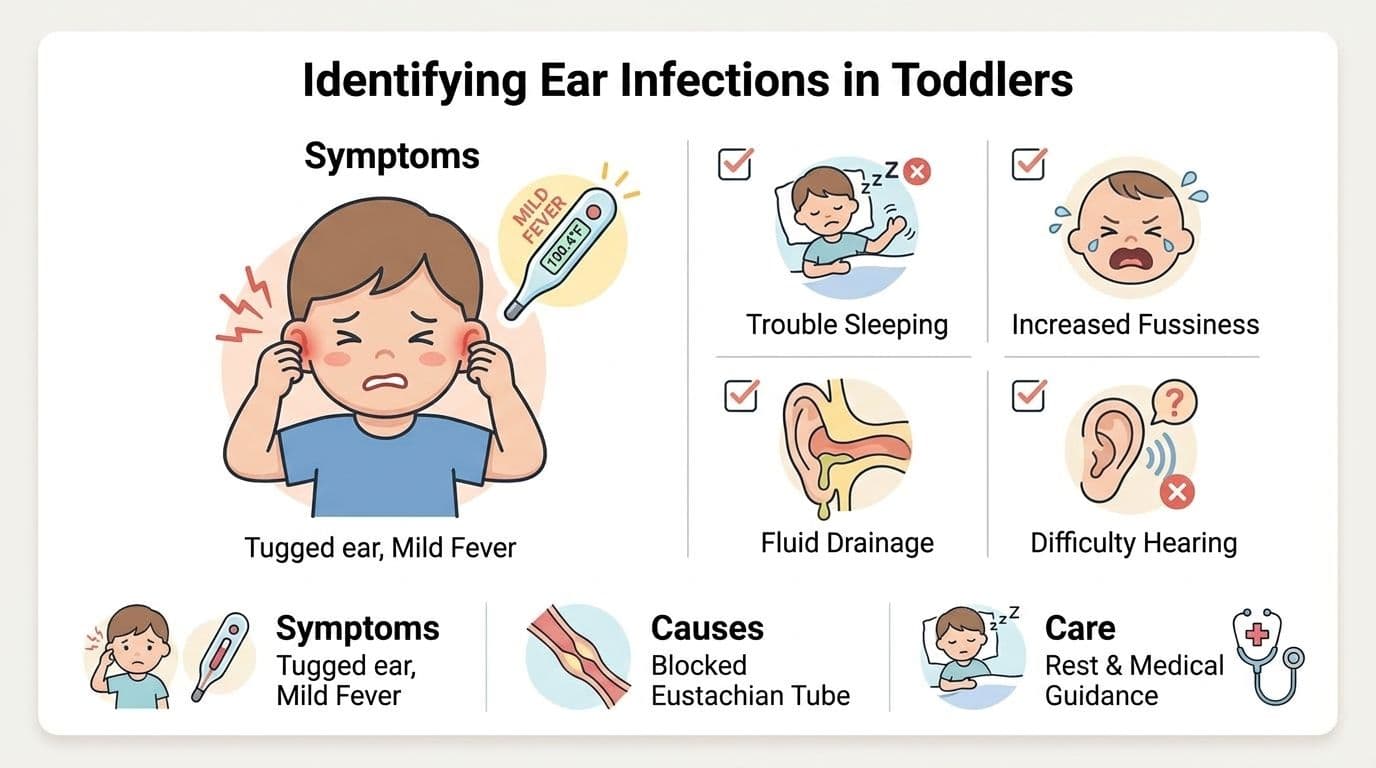
Recognizing the symptoms of an ear infection can be difficult, especially when your child is too young to explain what hurts. Symptoms may appear suddenly or develop after a cold.
Common signs include:
- Ear pain or discomfort
- Pulling or tugging at the ear
- Trouble sleeping
- Increased crying or fussiness
- Fever
- Difficulty hearing
- Fluid or pus draining from the ear
- Reduced appetite
- Problems with balance
Symptoms in Babies and Toddlers
Babies cannot always explain that their ears hurt. Instead, they may become unusually irritable, cry more often, or have trouble feeding and sleeping.
Some children pull at their ears simply because they are exploring their bodies. Ear pulling alone does not confirm an infection. Look for other signs, such as fever, disturbed sleep, or changes in how your child responds to sounds.
Ear Ache Symptoms Parents Should Watch
Ear ache symptoms can range from mild pressure to sharp or persistent pain. Your child may complain that their ear feels blocked, hold the side of their head, or become more uncomfortable at night.
Other ear ache symptoms may include reduced hearing, irritability, and fluid coming from the ear. If pain is severe, symptoms are worsening, or your child seems seriously unwell, seek prompt medical attention.
What Causes Ear Infections in Kids?
The most common cause is fluid buildup in the middle ear. When the eustachian tubes become swollen or blocked, fluid cannot drain properly. This can happen during or after a cold, flu, or allergy-related congestion.
Common causes and contributing factors include:
1. Colds and Respiratory Infections
A cold can cause swelling in the nose and throat. This swelling may affect the eustachian tubes and prevent normal drainage.
A viral ear infection may begin during or after a respiratory illness. Although viruses can play a role, some middle ear infections also involve bacteria.
2. Eustachian Tube Blockage
Eustachian tube blockage can trap fluid behind the eardrum. In young children, these tubes are narrower, so fluid may not drain as easily.
3. Exposure to Smoke
Secondhand smoke can increase a child's risk of ear problems. Keeping your home and car smoke-free is an important prevention step.
4. Group Child Care
Children who spend time in daycare or other group settings may encounter more respiratory germs. Frequent colds can increase the chances of developing middle ear problems.
Inner Ear Infection vs. Middle Ear Infection
An inner ear infection is different from the middle ear infection that commonly affects children.
Middle ear infections affect the space behind the eardrum and often cause ear pain, pressure, and temporary hearing changes. Inner ear problems involve structures responsible for hearing and balance and may cause symptoms such as dizziness or balance difficulties.
The location of the problem matters because different ear conditions require different evaluations and treatments. Do not assume that every earache is an inner ear infection.
If your child experiences significant dizziness, difficulty walking, sudden hearing changes, or severe symptoms, seek medical care promptly.
How Are Ear Infections Diagnosed?
A healthcare provider usually diagnoses an ear infection by reviewing symptoms and examining the ear with an otoscope. This instrument helps the provider look at the eardrum and identify signs of inflammation or fluid buildup.
The provider may ask:
- When did the symptoms begin?
- Has your child recently had a cold or fever?
- Is there ear pain or drainage?
- Has your child experienced hearing difficulties?
- Have similar problems happened before?
A hearing test or additional examination may be recommended if your child has recurring infections, persistent fluid, or concerns about hearing.
An accurate diagnosis is important because ear pain can also result from other conditions, including problems affecting the ear canal or pressure changes related to congestion.
How to Treat Ear Infections in Kids
Treatment depends on your child's age, symptoms, severity, and the cause of the infection. Some mild middle ear infections improve without antibiotics, while others require medication.
1. Pain and Fever Relief
Pain relief is an important part of helping your child feel comfortable.
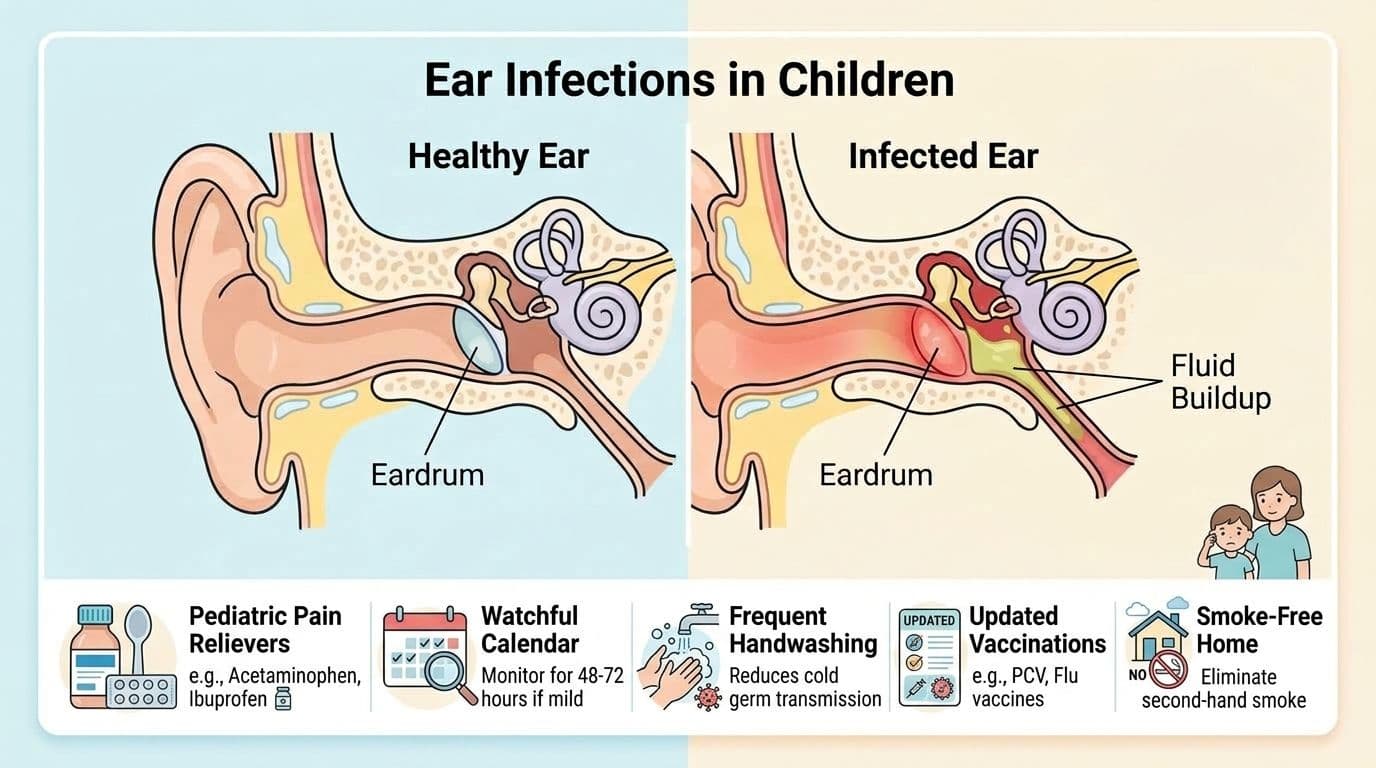
A healthcare provider may recommend an age-appropriate dose of acetaminophen or ibuprofen. Always follow the dosing instructions and ask a healthcare professional if you are unsure about the correct medicine or amount.
Never give aspirin to a child unless specifically instructed by a healthcare professional.
A warm cloth placed gently against the outside of the ear may also provide comfort. Avoid placing objects, oils, or unapproved drops inside your child's ear.
2. Watchful Waiting
In some cases, a provider may recommend watchful waiting for 48 to 72 hours. This means monitoring your child's symptoms and arranging follow-up care if the condition does not improve.
Watchful waiting is not appropriate for every child. Age, symptom severity, the presence of complications, and the certainty of the diagnosis all affect the decision.
If your child's pain increases, fever persists, or symptoms worsen, contact their healthcare provider.
3. Antibiotics When Needed
Antibiotics treat bacterial infections, not viral infections. A provider may recommend antibiotics when symptoms are severe, persist, or when the child's age and clinical findings make treatment appropriate.
Do not give your child leftover antibiotics or medicine prescribed for someone else. If antibiotics are prescribed, follow the provider's instructions and ask what to do if your child develops side effects or does not improve.
Antibiotics are not necessary for every middle ear infection, and using them only when appropriate helps reduce unnecessary side effects and antibiotic resistance.
How to Prevent Ear Infections in Children
You cannot prevent every infection, but several daily habits may reduce your child's risk.
1. Keep Vaccinations Up to Date
Recommended vaccinations can help protect children against illnesses that may contribute to ear infections. Speak with your child's healthcare provider about the vaccines appropriate for their age.
2. Avoid Secondhand Smoke
Do not allow smoking inside your home or near your child. Reducing exposure to tobacco smoke can help lower the risk of respiratory and ear problems.
3. Encourage Handwashing
Teach your child to wash their hands regularly, especially before eating and after being around people who are sick. Good hand hygiene can reduce the spread of germs that cause colds and flu.
4. Breastfeed When Possible
Breastfeeding may provide protection against some childhood infections. If you are breastfeeding, discuss feeding and nutrition questions with your healthcare provider.
5. Feed Babies in a Safe Position
Hold bottle-fed babies in an upright position during feeding. Avoid putting a baby to sleep with a bottle, as this may increase the risk of certain health problems.
6. Reduce Exposure to Illness
When practical, limit close contact with people who are sick and follow healthy hygiene practices in daycare and home settings.
When Should You Take Your Child to a Doctor?
Knowing when to seek medical care is essential. Contact a healthcare professional if your child has:
- Symptoms lasting more than two to three days
- Worsening ear pain
- Fluid, pus, or blood coming from the ear
- Hearing loss or difficulty responding to sounds
- A high fever or concerning changes in behavior
Seek urgent medical attention if your child has severe symptoms, a stiff neck, facial weakness, significant balance problems, or appears seriously ill.
Infants younger than three months with a fever of 100.4°F (38°C) or higher need prompt medical evaluation.
If your child has repeated ear infections, ask about follow-up care and whether hearing assessment or specialist evaluation is needed. Persistent fluid or repeated infections can sometimes affect hearing and speech development.
Frequently Asked Questions
1. Can I have an ear infection without a fever?
Yes. Children and adults can have an ear infection without a fever. Ear pain, pressure, fluid buildup, or hearing changes may occur without an elevated temperature. A healthcare provider can examine the ear to determine whether an infection is present.
2. How long does a fever last with an ear infection?
The duration depends on the cause, severity, and response to treatment. Many children begin improving within a few days, but persistent or returning fever should be discussed with a healthcare professional. Contact your child's provider if the fever continues, becomes high, or your child appears worse.
3. Can you have an ear infection without a fever?
Yes. The absence of fever does not rule out an ear infection. Your child may experience ear pain, irritability, trouble sleeping, or hearing changes without having a fever. A physical ear examination is needed for diagnosis.
4. How long will fever last with ear infection?
Some children experience fever for a short period, while others may need medical treatment depending on the infection. If your child is taking antibiotics and the fever remains or returns, contact the prescribing healthcare professional. Do not change medication without medical guidance.
5. What should I do if my child keeps getting ear infections?
Arrange an appointment with your child's healthcare provider. Repeated infections may require a review of risk factors, hearing evaluation, or specialist care. Depending on the child's condition, an ENT specialist may discuss options such as ear tubes.
Conclusion
Ear infections in children can be uncomfortable and stressful for the entire family, but understanding the warning signs and treatment options can help you respond appropriately. Early attention to pain, fever, hearing changes, and persistent symptoms can support better care.
Prevention starts with healthy habits, vaccination, reducing smoke exposure, and seeking medical advice when symptoms are concerning. Not every ear infection needs antibiotics, and the right treatment depends on your child's individual situation.
At MyHomeDoc Telehealth, we understand that getting medical advice for your child can be challenging when you have a busy schedule. Our virtual healthcare services may help you discuss symptoms and determine whether a telehealth visit is appropriate. Some ear problems require an in-person examination, so your provider can help guide you on the next step.
Visit www.MyHomeDoc.care to learn more about our telehealth services and explore convenient healthcare options for your family.
This article is for educational purposes only and does not replace professional medical advice. Contact a qualified healthcare professional for diagnosis and treatment of your child's symptoms.
Have questions? Talk to a doctor today.
MyHomeDoc physicians are available 7 days a week across Texas.
Book an Appointment