 MyHomeDoc

Testosterone Replacement Therapy Near Me in Texas: Costs, Benefits, and How to Start Online
Looking for testosterone replacement therapy near me in Texas? See costs, who qualifies, benefits and risks, and how to start online with a Texas doctor.

Testosterone Replacement Therapy Near Me in Texas: Costs, Benefits, and How to Start Online
By MyHomeDoc. Medically reviewed by Dr. Yasir Ahmed, MD.
If you are searching for testosterone replacement therapy near me in Texas, the short answer is yes, you can start it online with a video visit and labs near home, if blood tests show you have clinically low testosterone. It can improve energy, mood, sex drive, and muscle strength, but it is not right for everyone, and it carries trade-offs. One thing changed recently: on February 28, 2025, the FDA removed the cardiovascular risk language from the boxed warning on testosterone products. This guide covers who qualifies, what it costs, benefits and risks, and how it works.
What Is Testosterone Replacement Therapy?
Testosterone is the main male sex hormone. It affects energy, mood, sex drive, muscle mass, bone strength, and how your body stores fat. Levels naturally fall with age, often starting in your 30s and 40s, and can also drop because of obesity, sleep apnea, chronic illness, opioid use, or problems with the testes or pituitary gland.
TRT replaces the testosterone your body is not making enough of. It comes as injections, gels or creams, pellets placed under the skin, or oral tablets. The goal is to bring levels back into the healthy range and ease symptoms, not to push them above normal.
TRT is a long-term treatment, not a quick fix. Most men who start it stay on it for years, with regular blood tests.
Do You Actually Have Low Testosterone?
Feeling tired or less interested in sex does not by itself mean your testosterone is low. Stress, poor sleep, depression, and thyroid problems can cause the same symptoms, which is why diagnosis starts with blood work, not with how you feel alone.
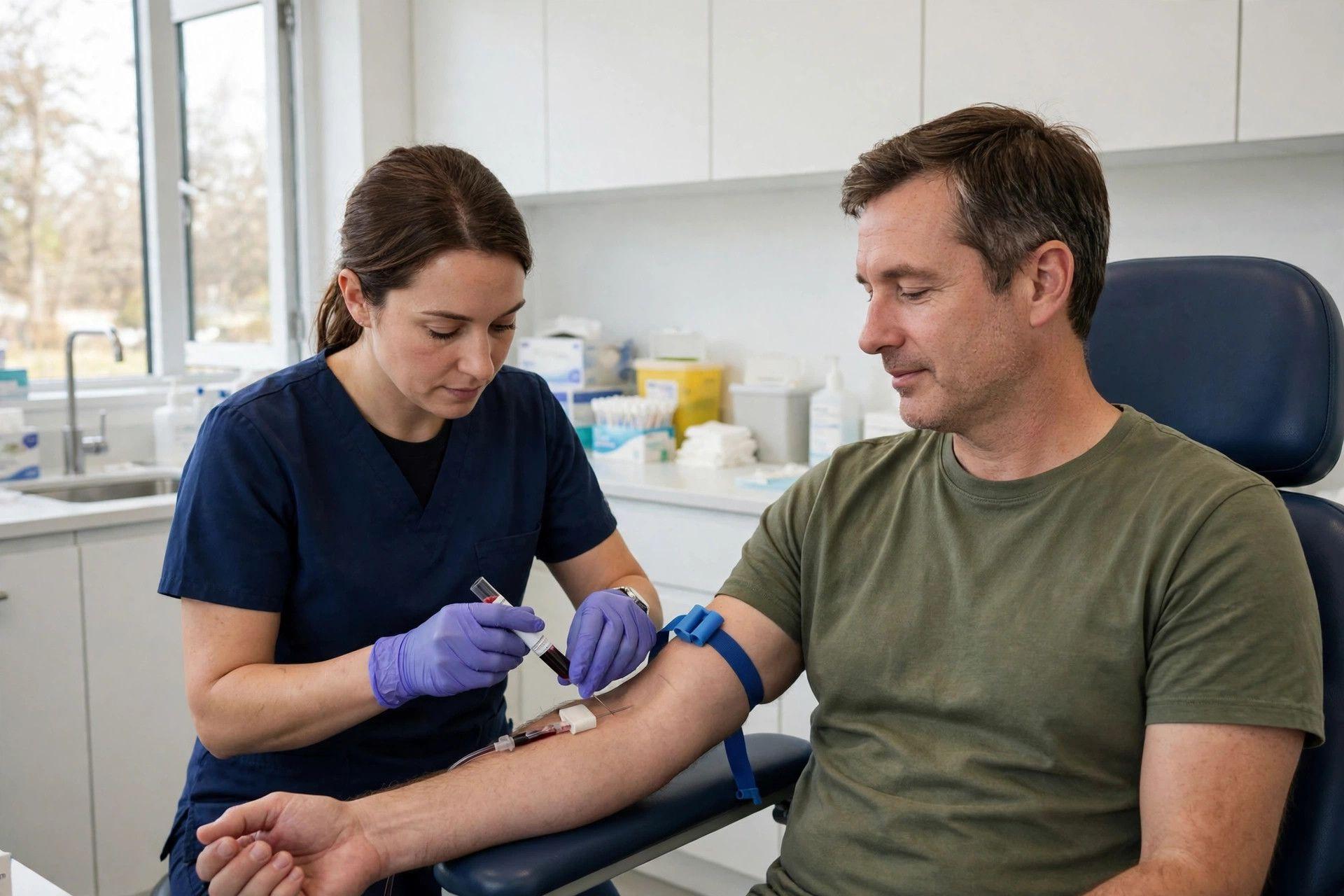
A diagnosis, also called hypogonadism, usually needs symptoms plus low blood levels confirmed on two morning tests showing total testosterone below 300 ng/dL, the American Urological Association cutoff. Your doctor will also check free testosterone and labs such as LH, FSH, hematocrit, and PSA.
Common symptoms include low energy, low sex drive, weaker erections, loss of muscle, more belly fat, low mood, trouble concentrating, and poor sleep. If several sound familiar, a blood test is the next step, not a guess.
TRT Benefits: What the Research Shows
For men with truly low testosterone, TRT can make a real difference. Trials show energy and fatigue improve in roughly 60 to 70 percent of men, and sex drive and erectile function respond well when levels start low, with studies showing 50 to 80 percent improvement in erectile function. In one trial, men on testosterone injections gained about 2.5 kg of lean mass in 20 weeks. Bone density also improves by 1 to 3 percent per year in the spine and hip, which lowers fracture risk as men age.
Mood and energy often improve within three to six weeks, muscle and strength gains take three to six months, and bone changes take a year or more.
TRT Delivery Methods Compared
- Method: Injections; How often: Weekly or every two weeks; Pros: Lowest cost, reliable levels; Cons: Needles, levels peak then fall between shots
- Method: Gels or creams; How often: Daily; Pros: No needles, steady levels; Cons: Can rub off on partners or children, daily routine
- Method: Pellets; How often: Every 3 to 6 months; Pros: Set and forget; Cons: Most expensive, dose cannot be adjusted quickly
- Method: Enclomiphene (oral); How often: Daily; Pros: Preserves fertility; Cons: Not actual testosterone, compounded, not FDA-approved for low testosterone
Injections, usually testosterone cypionate, are the most common choice because they work well and cost the least. There is no one product that is the best testosterone replacement therapy for men in every case, as the best choice depends on cost, needle comfort, and how steady you want your levels. Gels suit men who dislike needles, and pellets suit men who want treatment rarely. Enclomiphene is different: it prompts your body to make more of its own testosterone, which is why some men choose it when fertility matters.
Testosterone Replacement Therapy Cost in Texas
TRT prices vary a lot by provider, so here is what Texas men typically pay, based on published clinic and program prices. For testosterone replacement therapy cost, the monthly figure is only part of the story, so check what labs and follow-up visits are included.
- Option: MyHomeDoc telehealth visit; Typical cost: From $39; Notes: Video visit and lab review
- Option: Testosterone injections, medication only; Typical cost: $28 to $100 per month; Notes: Most affordable option
- Option: Gels or creams; Typical cost: $200 to $600 per month; Notes: Daily application
- Option: Pellets; Typical cost: $650 to $2,000 per insertion; Notes: Every 3 to 6 months
- Option: Online TRT programs in Texas; Typical cost: $85 to $199 per month; Notes: Often include visits, labs, and medication
- Option: Initial lab work; Typical cost: $60 to $200; Notes: Total and free testosterone, plus safety labs
Many men spend $1,200 to $2,500 per year all in, including medication, labs, and visits. Insurance sometimes covers TRT when blood tests confirm low levels, but many online programs are self-pay, so ask for the full monthly price up front, including labs and follow-up visits.
TRT Risks and Side Effects
TRT has real trade-offs, and a good clinic will talk about them before you start.
The most serious trade-off is fertility. TRT tells your brain to stop signaling the testes, and sperm production can fall to zero within about 10 weeks. If you want children, tell your doctor first. Options like hCG or enclomiphene can help, but they need planning in advance.
TRT side effects include acne and oily skin, mood swings, and a rise in red blood cell count, called polycythemia. If your hematocrit rises above 54 percent, treatment is usually paused. TRT can also worsen sleep apnea, shrink the testes, speed up hair loss in men already prone to it, and raise PSA, so regular hematocrit and PSA monitoring is part of safe treatment.
On the heart question, the picture has improved. The TRAVERSE trial followed about 5,246 men with low testosterone and heart risk factors, and found major cardiovascular events in 7.0 percent on testosterone versus 7.3 percent on placebo, essentially no difference. On February 28, 2025, the FDA removed the cardiovascular risk language from the boxed warning, added the TRAVERSE results, and added a blood pressure warning instead, while keeping the limitation for age-related hypogonadism. That does not make TRT risk-free, but the old fear that TRT causes heart attacks is not supported by the best current evidence.
What to Try Before TRT
TRT is not always the first step. Sleep apnea, excess weight, opioid painkillers, heavy alcohol use, poor sleep, and thyroid problems can all lower testosterone, so a good doctor checks these first. If your levels are only slightly low and the cause is fixable, fixing it beats starting lifelong hormone treatment.
Enclomiphene vs TRT: What Are You Actually Getting?
Some online brands sell enclomiphene as a testosterone treatment, and the distinction matters. Enclomiphene is not testosterone. It is a pill that prompts your body to make more of its own testosterone and preserves fertility, a real advantage for younger men. But it is compounded, not FDA-approved for low testosterone, and the evidence behind it is thinner than for TRT.
If a program advertises testosterone treatment but ships enclomiphene, you are not getting TRT, so know what you are actually taking and why.
Who Should Avoid TRT?
TRT is not right for men who want to father a child soon, unless a fertility-preserving plan is in place. Men with untreated severe sleep apnea, a very high red blood cell count, or a history of prostate cancer should also be cautious. Men whose testosterone is low-normal, roughly 400 to 600 ng/dL, usually see smaller benefits.
Testosterone Replacement Therapy Women
Testosterone replacement therapy for women is a different question from TRT for men. No testosterone product is FDA approved specifically for women, so use in women is off label and doses are much lower. Some women ask about it for low libido or low energy, but the evidence is thinner and risks such as acne, extra hair growth, and voice changes need a careful talk with a doctor first. This guide focuses on men, who make up most TRT patients.
What to Expect: Starting TRT Online in Texas
If you are comparing online TRT Texas options, the process usually follows these steps.
1. Book a video visit. You will talk with a Texas-licensed doctor about your symptoms, history, and goals.
2. Get morning blood work. Testosterone is highest in the morning, so labs are drawn before 10 a.m., usually at a Labcorp or Quest near you, and a second test confirms it.
3. Review your results together. Your doctor explains total and free testosterone, plus safety labs like hematocrit and PSA, and whether TRT makes sense.
4. Start treatment. If TRT is right, medication is shipped to your home, with instructions on how to use it.
5. Follow up with labs. Blood work is repeated after a few months to check levels and catch side effects early.
Testosterone is a Schedule III controlled substance, so Texas rules apply to how it is prescribed by telehealth. A video visit can start the process legally, and your doctor will handle the checks.
Low mood and low energy are not always low testosterone. Depression can look a lot like low T, and the two can overlap. If mood is the main issue, read our guide to ketamine therapy in Texas.
Frequently Asked Questions
How much does TRT cost in Texas?
Most men pay $85 to $199 a month for online TRT programs, or $28 to $100 a month for injections alone, plus lab work. Many spend $1,200 to $2,500 a year all in. Insurance sometimes covers TRT when blood tests confirm low levels, but many online programs are self-pay, so ask for the full monthly price first.
Is TRT legal in Texas, and can I get it online without a clinic visit?
Yes. Testosterone is a Schedule III controlled substance, so Texas rules apply, but a video visit can start the process legally. Labs are drawn near you, and medication is shipped to your home.
What testosterone level qualifies for TRT?
Usually two morning tests showing total testosterone below 300 ng/dL, along with symptoms. Your doctor will also check free testosterone and safety labs like hematocrit and PSA before deciding.
How long does TRT take to work?
Energy and mood often improve within three to six weeks, and sex drive usually picks up in the first few weeks. Muscle and strength gains take three to six months, and bone changes take a year or more.
Is TRT safe for the heart?
The best current evidence says the risk is low. The TRAVERSE trial followed about 5,246 men and found no meaningful difference in major heart events, and on February 28, 2025, the FDA removed the cardiovascular risk language from the boxed warning.
Will TRT affect my fertility?
Yes, and this is the biggest trade-off. TRT can shut down sperm production, sometimes to zero within about 10 weeks. If you want children, talk with your doctor about options like enclomiphene before you start.
This article is for general information only and is not medical advice. TRT is a prescription treatment with real risks, and it should only be started under the care of a licensed clinician who has reviewed your blood work and medical history.
Talk With a Doctor Before You Decide
If low energy, low mood, and low sex drive have been dragging on, a blood test is the fastest way to find out if testosterone is part of the story. Book a video visit with MyHomeDoc. Visits start at $39, same-day appointments are available seven days a week, and you can talk with a Texas-licensed doctor from home at myhomedoc.care.
Have questions? Talk to a doctor today.
MyHomeDoc physicians are available 7 days a week across Texas.
Book an Appointment